Retiring in Mexico: Myths, Facts & What Life Really Looks Like
What if you could retire somewhere warm, culturally rich, and surprisingly affordable… without falling for media exaggerations?
Imagine waking up in a place where colorful markets replace crowded highways, where neighbors greet you like family, and where a lower cost of living lets you finally breathe. For many retirees and long-term travelers, Mexico represents that dream — a chance to start fresh, slow down, and rediscover what a meaningful life feels like.
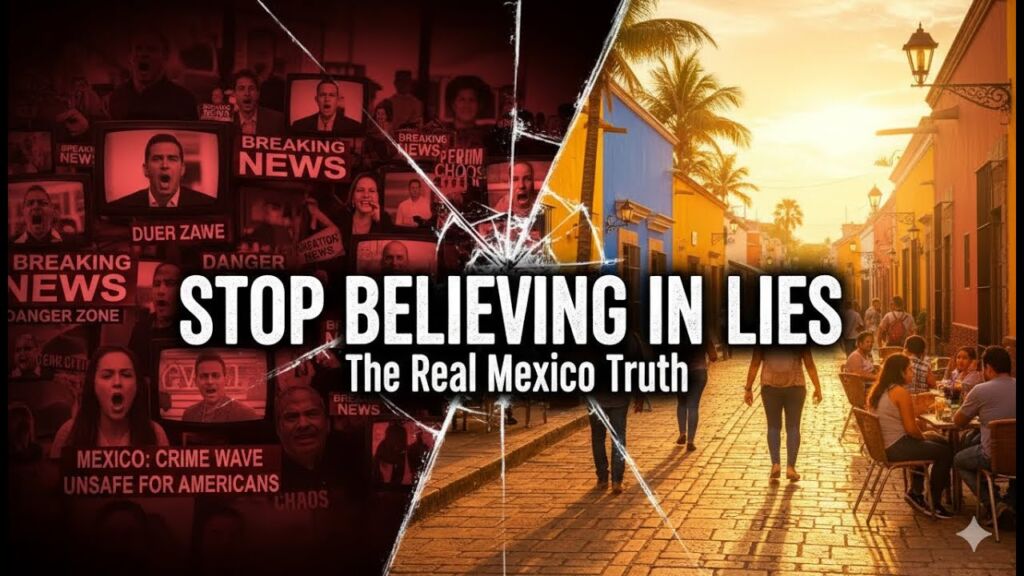
Yet if you’ve spent any time watching U.S. news or browsing YouTube, you’ve probably noticed something strange. Mexico is either painted as too dangerous to visit or a perfect paradise anyone can move to overnight.
Both extremes are misleading.
And if you’re seriously considering Mexico for retirement, long-term living, or even a first scouting trip, you deserve a clearer, more honest picture.
This guide breaks down the myths, the facts, and the realities — so you can understand the Mexico that people actually live in, not the one portrayed for views and ratings.
🇲🇽 Mexico Beyond the Headlines
Mexico is enormous, diverse, and impossible to summarize with a single label. It’s a country of coastal towns, bustling megacities, quiet rural villages, jungle regions, and polished colonial centers. Each area has its own personality, its own rhythm, its own challenges — and its own charm.
Some regions struggle with crime. Others are statistically safer than places where many Americans already live.
Some cities offer world-class infrastructure. Others move slowly, peacefully, but with fewer modern conveniences.
And that is exactly why Mexico is such an appealing retirement destination:
✔ You can choose the life you want.
✔ You can choose the pace you prefer.
✔ You can choose the balance between affordability, comfort, and culture.
Mexico is not “dangerous everywhere.”
Mexico is not “paradise everywhere.”
Mexico is real, and that’s what makes it worth exploring.
🌟 Why Mexico? A Balanced Look for Retirees & Expats
Here’s what genuinely sets Mexico apart:
Affordability compared to many U.S. cities.
Many retirees find they can live comfortably — especially if they earn in dollars.Regional safety differences.
While some states face high risks, places like Yucatán and Campeche consistently report some of the lowest crime rates in the country and even lower rates than major U.S. cities.Multiple legal pathways for residency.
Retirement visas, temporary residency, and permanent residency are all available — but they require proper documentation.Warm culture and slower pace of life.
Mexico is a country that values community, family, and connection.
But — and this is crucial — thriving here requires preparation, cultural curiosity, and respect for the legal process.
☀️ Year-Round Climate: What It Really Feels Like
The transcript does not provide specific climate details, so the climate section focuses on general lifestyle elements tied to region choice.
Mexico’s weather depends entirely on where you choose to live.
Large cities may offer cooler breezes, urban warmth, and access to culture.
Smaller towns may be quieter and more temperate but lack modern conveniences like high-speed internet.
Coastal areas are warmer and more humid, ideal for beach lovers.
Mountain regions often feel fresh and mild year-round.
Your climate experience will be shaped by your region — not by Mexico as a whole.
💵 Cost of Living in Mexico vs. the U.S.
The transcript mentions Mexico being more affordable than many U.S. cities but does not give detailed prices.
Here is how to present that information in a clean, useful way while staying faithful to the transcript:
Overall Cost of Living Comparison
| Category | Mexico (General) | Many U.S. Cities |
|---|---|---|
| Housing | Often lower cost | Typically higher |
| Daily expenses | More affordable in many towns | Higher, especially in metro areas |
| Dining & groceries | Can be cheaper depending on region | Generally more expensive |
| Healthcare | Varies by location | Often very high without insurance |
| Transportation | Depends on city size | Often costly due to car dependency |
Key Takeaway:
Mexico can stretch your retirement income further — but affordability varies widely depending on where you settle.
In other words: Mexico can be cheaper, but it is not universally cheap.
🌿 Daily Life: What to Expect
Daily life in Mexico offers a completely different rhythm than most Americans are used to. Here’s what that often looks like:
Waking up to quiet streets or ocean breezes instead of sirens and traffic.
Walking to local markets instead of driving to crowded big-box stores.
Spending your mornings in plazas, cafes, or parks rather than being stuck in long commutes.
Living in communities where people actually know their neighbors.
But Mexico also requires adjustments:
If you don’t speak Spanish, everyday tasks — setting up utilities, visiting a doctor, or even getting paperwork done — can be frustrating.
Bureaucratic processes may feel slow compared to what retirees are used to.
Quality of life differs dramatically between big cities and small towns.
People who love living here embrace the change, respect the culture, and stay open to learning new things.
🛒 Shopping & Essentials
Shopping in Mexico varies by region, but the transcript points out a few key differences:
Bigger Cities Offer:
World-class restaurants
Stronger transportation networks
Modern shopping centers
Better hospitals
Higher living costs
Smaller Towns Offer:
Peace and affordability
Local markets and slower living
Limited infrastructure
Possible challenges with internet or medical access
Here’s a simple table that organizes these differences:
| Feature | Big Cities | Small Towns |
|---|---|---|
| Supermarkets & amenities | Many options | Limited options |
| Hospitals | Advanced services | May require travel to larger cities |
| Cost of living | Higher | Lower |
| Pace of life | Fast-paced | Calm and relaxed |
| Language accessibility | More English speakers | Mostly Spanish-speaking |
🏥 Healthcare in Mexico
Based on the transcript:
Large cities offer stronger medical infrastructure.
Smaller towns may lack hospitals and specialist services.
This means retirees often choose:
Smaller towns for peace and affordability,
while relying on bigger cities for advanced medical care.
Many expats choose to:
Use local clinics for basic appointments
Travel to major cities for specialists or procedures
Consider private insurance depending on health needs
Again, your healthcare experience depends on the region — not the country as a whole.
🚕 Getting Around & Connectivity
While the transcript doesn’t include transportation prices or specifics, here’s what we can say:
Mexico City and other major hubs offer strong connectivity, airports, and transit options.
Smaller towns may require more planning and may not have extensive public transportation.
Some retirees prefer having a car, while others rely on walking or using local transport.
Getting around Mexico is usually manageable — but convenience varies by region.
🎭 Culture, Lifestyle & Community
Mexico’s culture is one of the biggest reasons retirees fall in love with the country. It’s warm, colorful, meaningful, and deeply community-focused.
Expect to enjoy:
Friendly neighbors and a strong sense of community
Vibrant local traditions and music
Incredible food and daily markets
A lifestyle centered on connection and enjoyment, not speed
But remember:
Culture also comes with adjustment.
Things move at a different pace, systems differ from the U.S., and if you don’t speak Spanish, you’ll need patience.
⚖️ Pros and Cons of Retiring in Mexico
Pros
Lower cost of living than many U.S. cities
Certain states (like Yucatán and Campeche) report very low crime rates
Multiple legal residency pathways
Friendly communities and rich culture
Huge lifestyle variety: beaches, small towns, cities, colonial regions
Cons
Safety varies significantly by region
Language barriers can make daily tasks difficult
Smaller towns may lack hospitals or fast internet
Residency requires meeting financial requirements
Media myths can create unrealistic expectations
Here’s a clean table version for your blog:
Pros vs. Cons Table
| Pros | Cons |
|---|---|
| More affordable than many U.S. cities | Safety differs by region |
| Friendly, community-oriented culture | Language barriers for non-Spanish speakers |
| Residency pathways available | Bureaucracy can be slow or confusing |
| Peaceful lifestyle options | Some towns lack hospitals or strong internet |
| Diverse living environments | Not an instant “paradise” as media portrays |
🌅 Final Thoughts: Is Mexico the Right Place for You?
Mexico isn’t for everyone — and that’s completely okay.
If you need loud nightlife, giant malls, or modern services on every corner, some regions may feel challenging.
If you struggle with language barriers or expect residency to be automatic, you may face frustration.
But if you’re looking for:
A calmer pace of life
A more affordable retirement
Friendly communities
Warm culture
A meaningful fresh chapter
A place where life feels more human and less hurried
…then Mexico might be exactly what you’ve been searching for.
And remember:
To move here legally and confidently, you must follow the proper immigration steps.
That’s where having a professional immigration lawyer makes the transition smoother, safer, and far less stressful.
If you’re serious about exploring life here, you can even book a free consultation through our website to understand your residency options and avoid common mistakes.
Mexico isn’t a myth.
It’s not a fantasy.
It’s a real, vibrant opportunity — for those who choose it wisely.